
The Transformative Benefits of Urban Agriculture
Uncover the advantages of urban farming as a tool in our fight against climate change.
 Written byRob Boyle
Urban agriculture represents a disruptive approach to food production within city landscapes. It involves growing plants and raising animals within and around cities, bringing many social, economic, and environmental benefits.
This practice enhances access to fresh produce, promotes well-being, and fosters community development amidst the concrete backdrop of urban areas.
Key takeaways
- Urban agriculture boosts access to fresh food, addresses food and nutrition security issues and contributes to mental and physical health.
- It promotes education on sustainability while serving as a platform for social interaction.
- The practice fosters community development and assists in climate change mitigation.
A brief overview of agriculture in cities
In spaces as diverse as rooftop gardens to community plots, urban farmers are turning underused areas into vibrant growth centres.
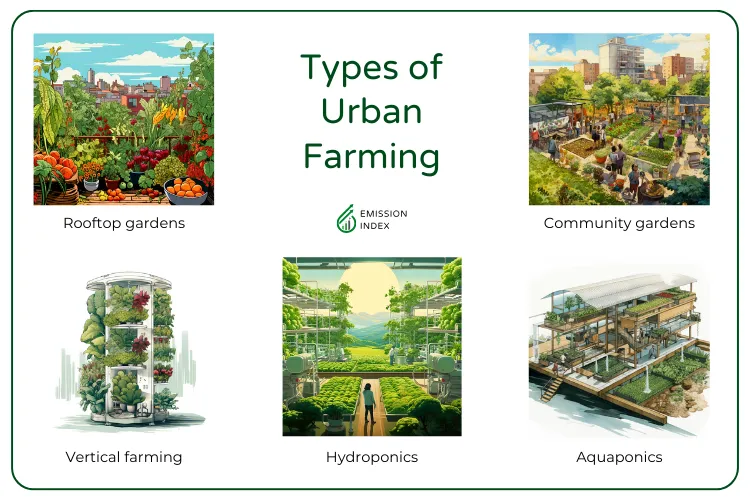
Types of urban farming
- Community gardens: Spaces where locals grow food collectively.
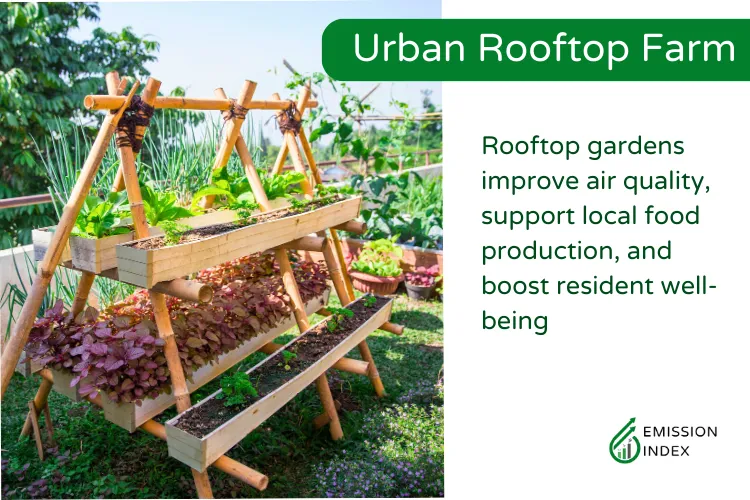
- Rooftop gardens: Utilising rooftops to cultivate crops.
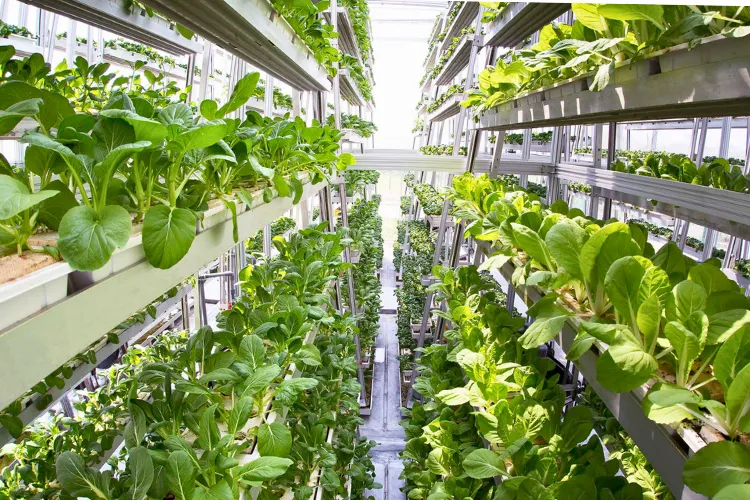
- Vertical farming: Growing plants on stacked layers, often indoors.
- Hydroponics: Soil-less growing of plants in nutrient-rich solutions.
- Aquaponics: Combining fish farming (aquaculture) with hydroponics.
Everyday products produced through urban gardening include a wide range of vegetables, fruits, herbs, and flowers.
How does urbanisation affect agriculture?
Urbanisation significantly alters land use, with arable land often repurposed for construction.
As urban areas expand, farmland is often converted into residential or commercial areas, reducing available land for traditional farming.
This can lead to decreased agricultural productivity and potential food shortages.
It causes challenges for traditional farms. They must adapt or relocate, impacting livestock and crop production.
Benefits of urban farming
Urban farming emerges to optimise local space and provide habitats for pollinators and birds.
These green spaces also help regulate the urban climate and improve air quality while addressing food security and environmental sustainability.
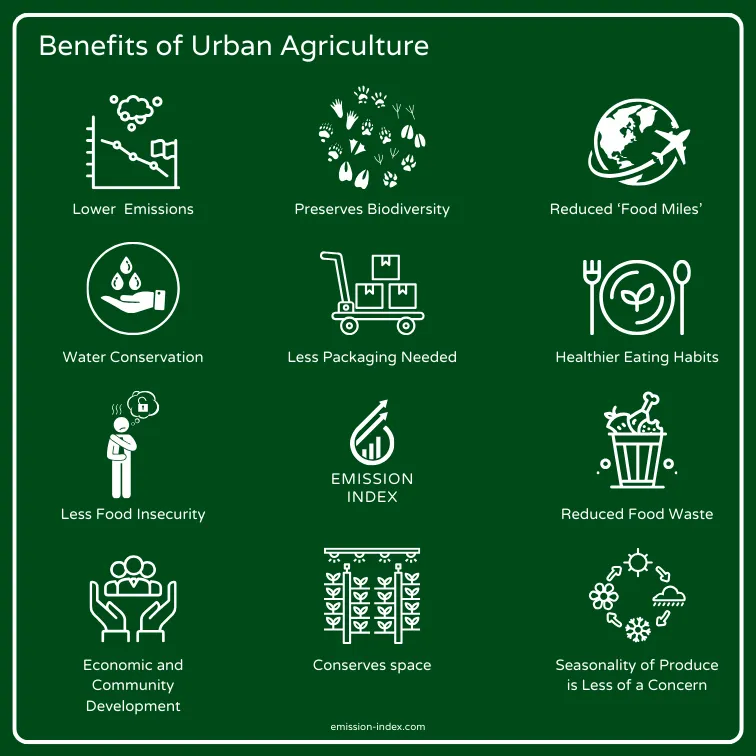
1. Reduced emissions and environmental impact
By growing food within city boundaries, it shortens supply chains. This leads to a significant drop in emissions from transportation.
Fewer lorries rumbling into cities mean less pollution and a smaller carbon footprint.
Within its leafy confines, urban gardening does more than just produce food. It:
- Enhances air quality by absorbing pollutants
- Increases water retention, which helps manage stormwater
- Sequesters carbon, akin to a sponge soaking up water, but with CO2
- Regulates urban temperatures through what is similar to nature’s own air conditioning system
Urban gardens also turn organic refuse into valuable compost. This reduces the organic waste stream markedly. It’s a case of one person’s trash becoming another’s treasure, providing nutrients to the earth.
2. Preserving biodiversity and ecosystem services
Urban farming nurtures biodiversity by providing habitats for pollinators like bees and butterflies and conserving local flora and fauna.
This patchwork of green spaces forms interconnected habitats, bolstering urban ecosystems.
Key benefits:
- Ecosystem services: Urban agriculture facilitates vital ecosystem services. It purifies air, mitigates pollution, and regulates climate.
- Community gardens: These act as living libraries for plant varieties, preserving genetic diversity.
- Essential organisms: Community gardening and urban farming attract bees, butterflies, and birds that naturally pollinate plants and control pests.
Concrete actions that support the fauna and flora of urban centres include:
- Cultivation of varied species: Urban gardens typically grow a wide range of plants, supporting a rich life tapestry.
- Habitat creation: By providing food, shelter, and breeding grounds, urban gardens create essential habitats amidst the urban sprawl.
- Preservation of biodiversity: These urban oases prevent the loss of species by conserving flora and fauna through active cultivation.
Examples of biodiversity support:
- Birdhouses attract insect-eating birds.
- Flower beds sustain bee populations critical for pollination.
- Water features support aquatic organisms and attract birds.
The myriad life forms supported by agriculture in the city form the building blocks of a resilient urban ecosystem. They enrich our cityscapes, making urban areas more hospitable for humans and wildlife.
3. Reduced ‘food miles’
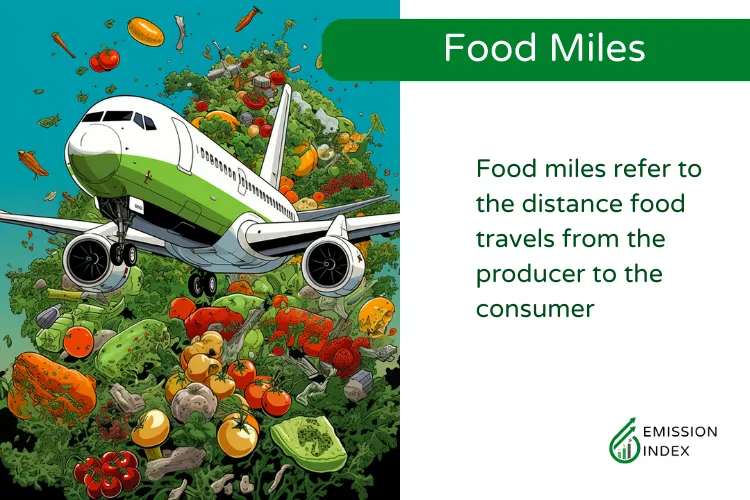
Food miles refer to the distance food travels from the producer to the consumer.
- Local harvesting: Urban farming cuts down on the distance that food travels. It brings the farm to the consumer’s doorstep.
- Carbon footprint: With shorter travel distances, urban agriculture lowers the carbon emissions of transporting imported food.
Some sobering statistics on the impact of food miles
- A 2022 study highlighted that transport accounted for 19% of food-related emissions.
- The same study highlighted that freight transport of fruits and vegetables accounts for 36% of food transport emissions. Almost double the greenhouse gases released in their production.
By supporting urban farms, consumers aid in creating a more economically and environmentally sustainable system
Urban agriculture is an efficient way to bridge the gap between production and consumption.
It ensures fresh and healthy food while offering a resilient alternative to long-distance imports.
4. Water conservation
Urban agriculture plays an important role in promoting water conservation through innovation.
Specific strategies for efficient water use in urban environments include:
- Controlled delivery of nutrient solutions
- Recirculation systems to minimise water loss
- Moisture monitoring to apply water precisely when needed
One standout technique is hydroponics. It showcases efficiency by utilising significantly less water—often up to 90% less— than traditional soil-based agriculture.
Farmers employ nutrient solution control in hydroponic farming to eliminate much of the waste associated with conventional farming practices.
Nutrient solution control ensures plants receive just the right amount without excess. This method starkly contrasts the vast volumes of water traditional agriculture often loses to runoff.
Urban farming approaches like aquaponics also bolster sustainability. These systems pair plant growing with fish farming, where water serves a dual purpose.
Plants filter and clean the water for fish, which in return, provide essential nutrients for the plants. It’s a symbiotic relationship that mirrors a natural ecosystem.
5. Less packaging required
The environmental impact of packaging is substantial, with plastic waste clogging up landfills and oceans, and paper waste contributing to deforestation.
Urban farming directly addresses this issue by cutting down on the demand for packaging and reducing the amount of waste generated.
By selling produce directly to consumers, farmers bypass the onerous packaging. This means that items like lettuce and tomatoes don’t arrive shrouded in plastic. Instead, they go from plant bed to plate with minimal packaging.
6. Healthier eating habits
Cultivating one’s own food ties a person to their food origins. This food awareness underscores healthy eating habits.
A person who grows their own carrots is more likely to enjoy them. They understand the effort that goes into farming and likely prefer biting into a crunchy, earthy root over processed snacks.
Minimising the use of pesticides and fertilisers, urban gardeners often favour organic methods because they’re personally invested in the food they eat.
Lastly, urban agriculture nurtures a consciousness about food waste. If one invests time in growing food, they’re less inclined to let it go to waste.
This awareness extends beyond personal consumption, often sharing harvests and reducing community waste.
7. Reduces food insecurity
A food desert is an area with limited access to affordable and nutritious food.
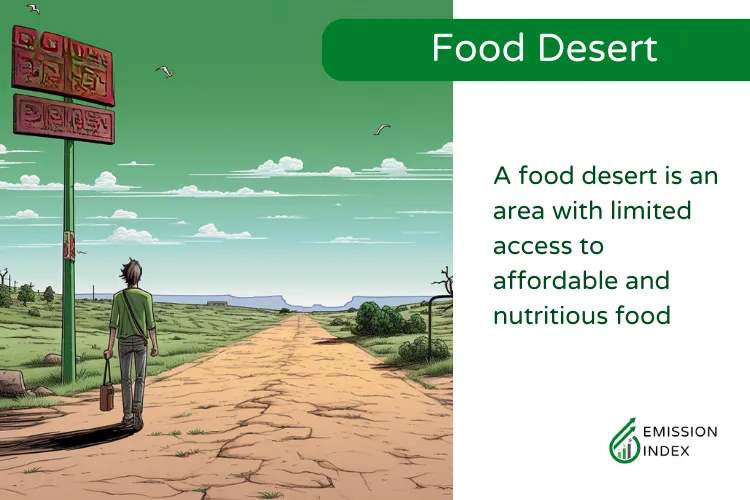
Statistics underscore the harsh disparities in food access. In 2022, 12.8% of US households experienced food insecurity, affecting 44.2 million Americans.
Urban farms transform these deserts, offering fresh sustenance where there was once scarcity.
Urban agriculture tackles the challenge of food and nutrition security in two significant ways:
- Increases the local supply of nutritious food.
- Grants inhabitants of food deserts better access to these foods.
8. Seasonality of produce is less of a concern
In urban agriculture, the ancient cycle of the seasons becomes a fading concern.
They design indoor growing systems to trump traditional season limitations. Even in the chill of winter, tomatoes bloom, and leafy greens sprout.
Packed into controlled environments, layers of produce grow under optimised conditions.
- Year-round cultivation: Indoor farms can produce resilient fresh foods regardless of the season.
- Unaffected by weather: Plants are sheltered from storms, frost, and drought.
- Stable supply: A consistent harvest shelters consumers from the volatility of seasonal crops.
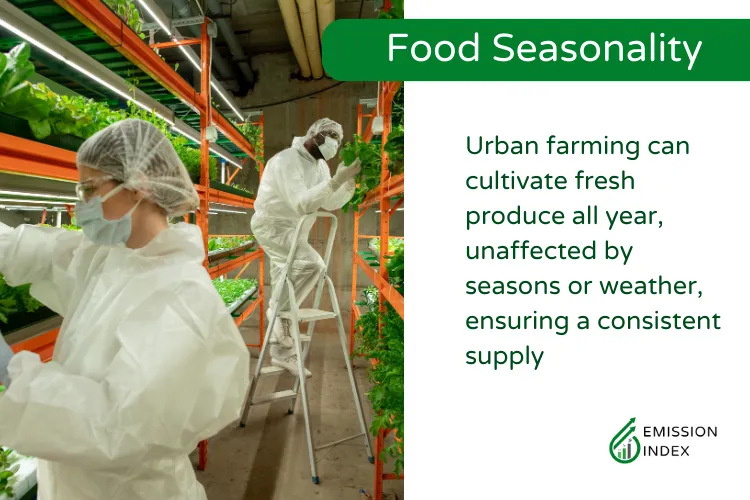
The approach creates resilient food systems and decreases food miles to mere food feet. Lettuce, once a traveller from distant fields to plates, now makes a short trip from one’s own balcony or rooftop garden.
One enjoys a healthy diet with a minimal carbon footprint.
9. Reduced food waste
Urban agriculture acts like a neighbourly gardener trimming the excess branches of food waste.
Demand and supply alignment in urban farming is akin to tailoring a suit; it precisely fits local needs.
This method curbs overproduction and, consequently, reduces waste.
- Rejection of ugly produce is lessened, as local buyers are more accepting of fresh fruits and vegetables despite their appearance.
- Composting: Urban farms transform organic waste into compost, enriching the soil and creating a closed-loop system.
- Sustainability: The proximity of urban farms also slims down the distance food travels from farm to consumer. Shorter food miles mean fresh produce can be harvested at peak ripeness, lessening the chance of spoilage during transport.
Urban agriculture acts as a solution where food is grown, mindfully consumed, and preserved, creating sustainable urban food ecosystems.
10. Encourages economic and community development
Urban agriculture acts as a seedling for local economies, sprouting economic and communal benefits.
The ripple effect of urban gardening extends beyond mere greenery, nourishing the soil of neighbourhoods with the following opportunities:
- Economic benefits: Urban agriculture attracts capital investment into communities. It lays the groundwork for business opportunities that blossom, from market garden ventures to larger-scale urban farms.
- Community development: These green initiatives support neighbourhood beautification. They often lead to increased property values, echoing the adage - “As the garden grows, so does the community.”
Employment
- Diverse employment options: Urban farms cultivate a variety of roles, from horticulturists to market sellers.
- Skill development: They provide a fertile ground for growing agricultural expertise, seeding future careers.
- Inclusive opportunities: They often extend job training to marginalised groups, sowing the seeds of inclusivity.
Civic engagement
- Urban agriculture can be the bedrock of civic engagement, thriving when local people weave it into the community fabric.
- It encourages volunteerism and local decision-making, fostering a robust sense of place.
Healthy communities
- Accessible fresh produce: Community gardens are supermarkets without walls, where fresh produce is simply a garden gate away.
- Nutritional education: They serve as classrooms under the sky, where learning about nutrition is hands-on.
- Youth engagement: These gardens are fertile learning grounds for tomorrow’s caretakers of the earth.
Urban agriculture nurtures healthier, more economically resilient communities and solidifies its role as a cornerstone of urban advancement.
11. Conserves space
Urban agriculture introduces clever ways to cultivate in cramped quarters.
It’s like assembling a puzzle, fitting plants into the urban fabric where you least expect them.
Some crucial innovations include:
- Vertical farming: This method stacks crops in layers, going upwards rather than outwards. It’s akin to high-rise living for plants. Vertical farming can produce as much as traditional farming on just a fraction of the land – consider that Vertical Harvest achieves the output of 5 acres on just 1/10 of an acre.
- Rooftop gardens: City rooftops provide an unexpected oasis for growth. They utilise unoccupied space effectively, turning grey into green.
- Space-saving techniques: Planters that hang from walls or railings, modular systems that fit together – these small touches collectively transform limited urban open spaces into productive plots.
Such approaches enhance the efficiency and productivity of urban farming initiatives.
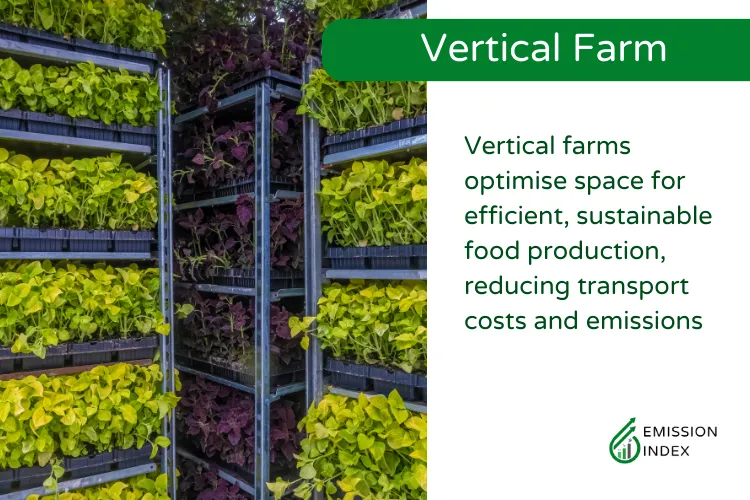
With less ground to cover, maintaining crops becomes more manageable.
Farmers can focus on the vertical rather than the horizontal, increasing yield per square metre.
This isn’t just about doing more with less; it’s about reimagining how space and agriculture co-exist in the cityscape.
Challenges of urban farming
Much like a garden blooming in a concrete jungle, urban agriculture faces its share of challenges.
From narrow economic margins to complex policy landscapes, the barriers are diverse. But not insurmountable.
- There is intense competition for water and land resources, and communities with limited access to green spaces often suffer the most. Community engagement is crucial.
- In dense cities, finding ample space for farming activities is daunting. Creative solutions include rooftop gardens and vertical farming to optimise limited areas.
- Soil contamination poses risks, making innovative farming essential. Soil testing and remediation are vital for plant health. Water conservation methods like drip irrigation can save water and cut costs.
- Knowledge empowerment: Farmers must understand modern methods and challenges. Therefore, training and education are indispensable.
- Pest management: Understanding local pest ecosystems allows for proactive control measures.
- Economic challenges and policy barriers can be overcome by tapping into local grants or crowdfunding and engaging with policymakers for better support systems.
In combining these approaches, urban farming can transform obstacles into stepping stones.
By applying the appropriate methods and education, alongside socioeconomic and policy support, urban agriculture can thrive, bringing fresh produce and greenery to the city’s heart.
Inspiring urban agriculture projects from around the world
Urban agriculture turns city landscapes into bountiful havens. Here are some unique approaches.
1. Bowery Farming, USA
Headquartered in New York and with farms across the USA. This indoor vertical farming start-up employs software and robotics to grow produce inside warehouses, optimising water and energy use per square foot.
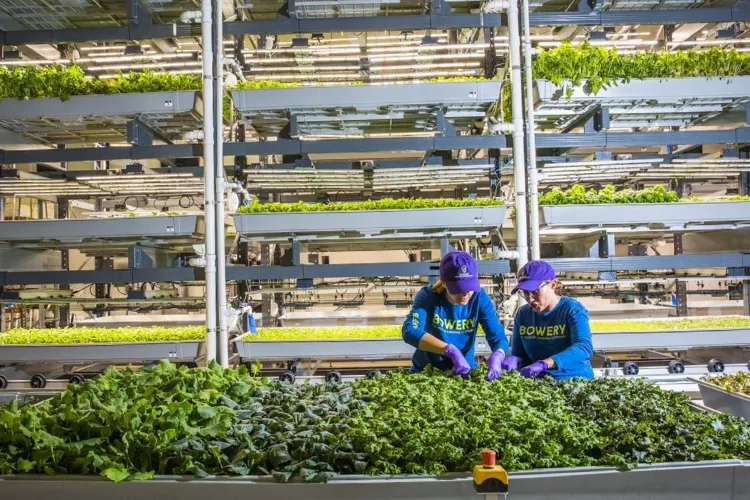
Source: Bowery Farming Source: Bowery Farming
2. Sky Greens, Singapore
The world’s first low-carbon, hydraulic, water-driven urban vertical farm. It produces vegetables using less energy and water, significantly contributing to Singapore’s local food supply.
Source: Sky Greens Source: Sky Greens
3. Detroit Dirt, USA
A compost company in Detroit that regenerates waste into resources, working with local businesses and coffee houses to promote a culture of organic waste recycling.

Source: Detroit Dirt Source: Detroit Dirt
4. Ferme de Paris, France
A 5-hectare eco-friendly farm focused on educating about sustainable food production. It offers various activities like workshops and training alongside traditional farming demonstrations, including crops, livestock, and permaculture. The farm adheres to organic agriculture standards, avoiding synthetic chemicals and GMOs.

Source: Paris.fr Source: Paris.fr
5. GrowUp Farms, UK
A leader in vertical farming based in Kent, UK, operating a climate-controlled facility powered by renewable energy. Their approach ensures consistent crop growth year-round, independent of external weather challenges.

Source: GrowUp Farms Source: GrowUp Farms
These examples show the diverse ways urban farming can be integrated into cityscapes, from high-tech vertical farms to community-driven gardens, each contributing to sustainable food production and local community engagement.
Frequently asked questions
What are the top plants suited for urban farming endeavours?
Leafy greens like lettuce and spinach thrive in urban gardens due to their compact size and short growing periods. Herbs such as basil and cilantro are also popular for their adaptability and frequent use in kitchens.
What are the primary health improvements linked to participating in urban agriculture?
Engagement in urban agriculture can reduce stress and increase physical activity. Access to fresh produce also supports a balanced diet, which is fundamental to preventing chronic diseases.
How does urban agriculture positively influence community cohesion?
Urban farms often become gathering spots, fostering social interactions and creating bonds among neighbours. They provide a shared space for cultural exchange and collective learning.
Can urban farming contribute to environmental preservation by managing runoff effectively?
Yes, urban farms can mitigate stormwater runoff by absorbing rainfall and filtering pollutants. Green roofs and rain gardens within urban farms are especially effective in managing water in dense cityscapes.
Does farm insurance cover urban agriculture?
Standard farm insurance policies may not cover urban agriculture, as these are typically designed for traditional rural farming practices. However, some insurers offer specialised policies or endorsements that cover urban farming activities.
It’s essential to check with insurance providers for specific coverage details, as urban agriculture can have unique risks and requirements compared to conventional farming. If you’re involved in urban agriculture, discussing your particular needs with an insurance professional to ensure appropriate coverage is advisable.
What are the social benefits of urban farming?
Urban farming has numerous social advantages, including community engagement and educational opportunities. It enhances access to fresh produce, particularly in areas with limited options, improving public health and nutrition.
These urban green spaces offer mental and physical health benefits, create local employment, and stimulate economic growth. They serve as cultural hubs for diverse communities to share traditions and knowledge while educating about sustainability. They beautify urban areas, promote social inclusion, and empower communities towards self-sufficiency.